
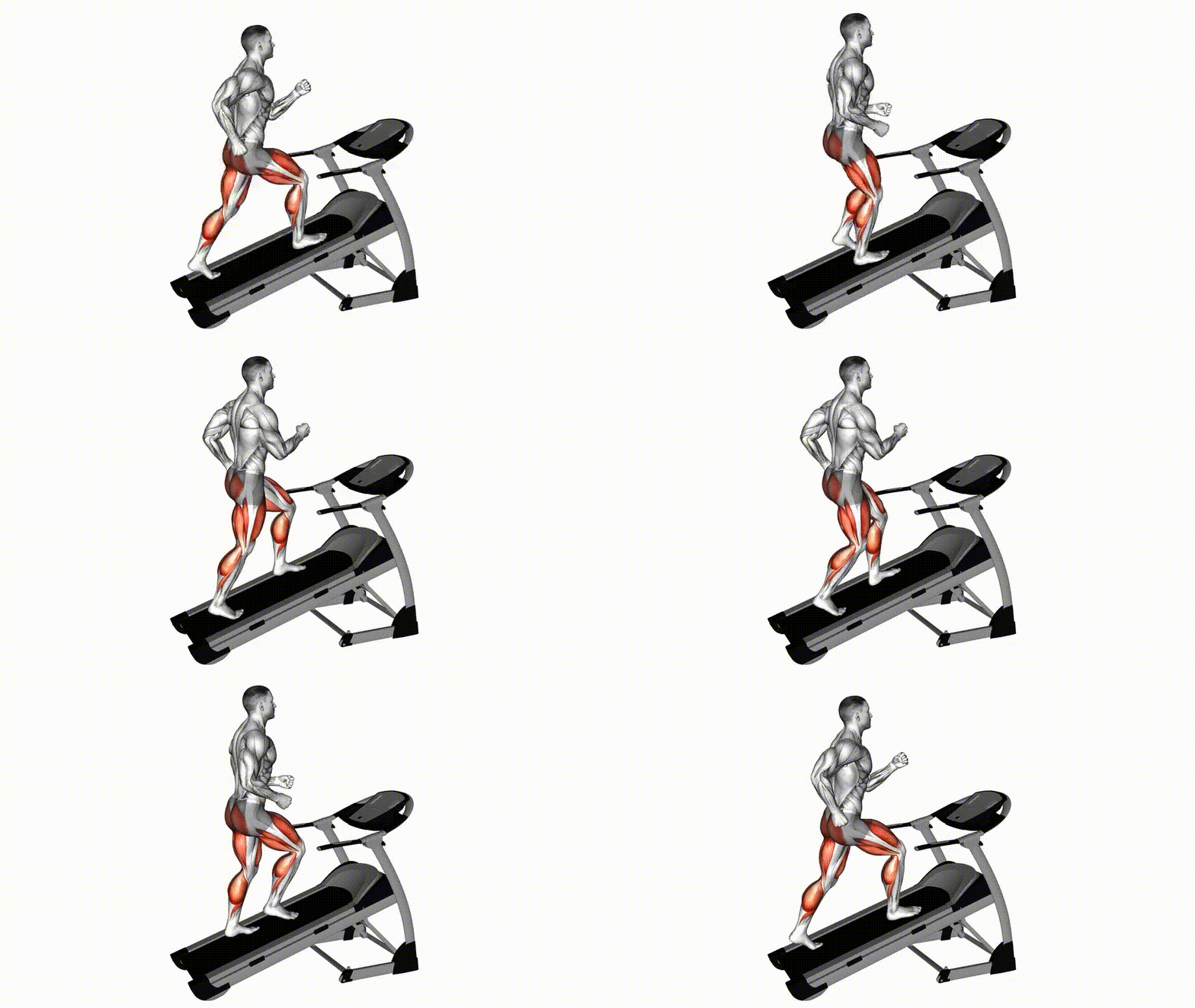
How to Do the Walking on Incline Treadmill
- Start the treadmill at a slow flat walk and clip on the safety key.
- Raise the incline to 5 to 10 percent while keeping the speed moderate.
- Lean slightly forward from the ankles, not the waist, so the torso stays in line with the legs.
- Take full steps, landing heel first and pushing through the toes to drive up the slope.
- Keep the hands off the rails and swing the arms naturally.
- Adjust speed and incline so breathing is elevated but speech is still possible.
- Lower the incline to flat for the last two to three minutes before stopping.
Common Mistakes
- Holding the handrails: Gripping the rails on an incline can halve the effort. Reduce the grade or speed until you can walk hands free.
- Bending at the waist: Hinging forward to fight the slope strains the lower back. Lean from the ankles and keep the chest up.
- Incline too steep too soon: Jumping to 15 percent tightens the calves and forces rail holding. Build the grade over several weeks.
Programming Tips
Use walking on an incline treadmill as a standalone cardio session, a finisher after upper body training or low intensity work on rest days. Do 20 to 40 minutes at 5 to 10 percent incline and a brisk pace, or for higher intensity perform 4 to 6 sets of 120 to 180 seconds steep with 2 minutes flat walking between each.
Set the speed to 5 to 6 kilometres per hour and the incline to 5 percent, hands off the rails and torso leaning from the ankles. Bodyweight is the load, so progress by adding 1 percent incline or 5 minutes each week once the session feels comfortable. The most common fault is holding the rails; fix it by lowering the grade until you can swing the arms naturally.
Common Questions
What muscles does incline treadmill walking work?
It works the glutes, hamstrings and calves more than flat walking, with the quadriceps and hip flexors assisting. The core works to keep the torso upright against the slope.
What incline should I walk on the treadmill?
Five to ten percent is the sweet spot for most people, with 12 percent and above reserved for shorter, harder sessions. Start at 3 to 5 percent if you are new and build gradually.
Is incline walking good for fat loss?
Yes, it burns noticeably more energy than flat walking at the same speed and is easy to sustain for 30 to 40 minutes. Combined with a calorie deficit it is one of the most joint-friendly fat loss tools available.
Is incline walking bad for your knees or lower back?
Incline walking is generally kinder to the knees than running or downhill walking. Lower back discomfort usually comes from bending at the waist, so lean from the ankles and keep the incline moderate.
Related cardio exercises
Other ways to train the same muscle, with whatever equipment you have.
Track This Exercise in the App
Log your walking on incline treadmill sets in 1RM.fit and watch your estimated 1RM update automatically as you get stronger.