
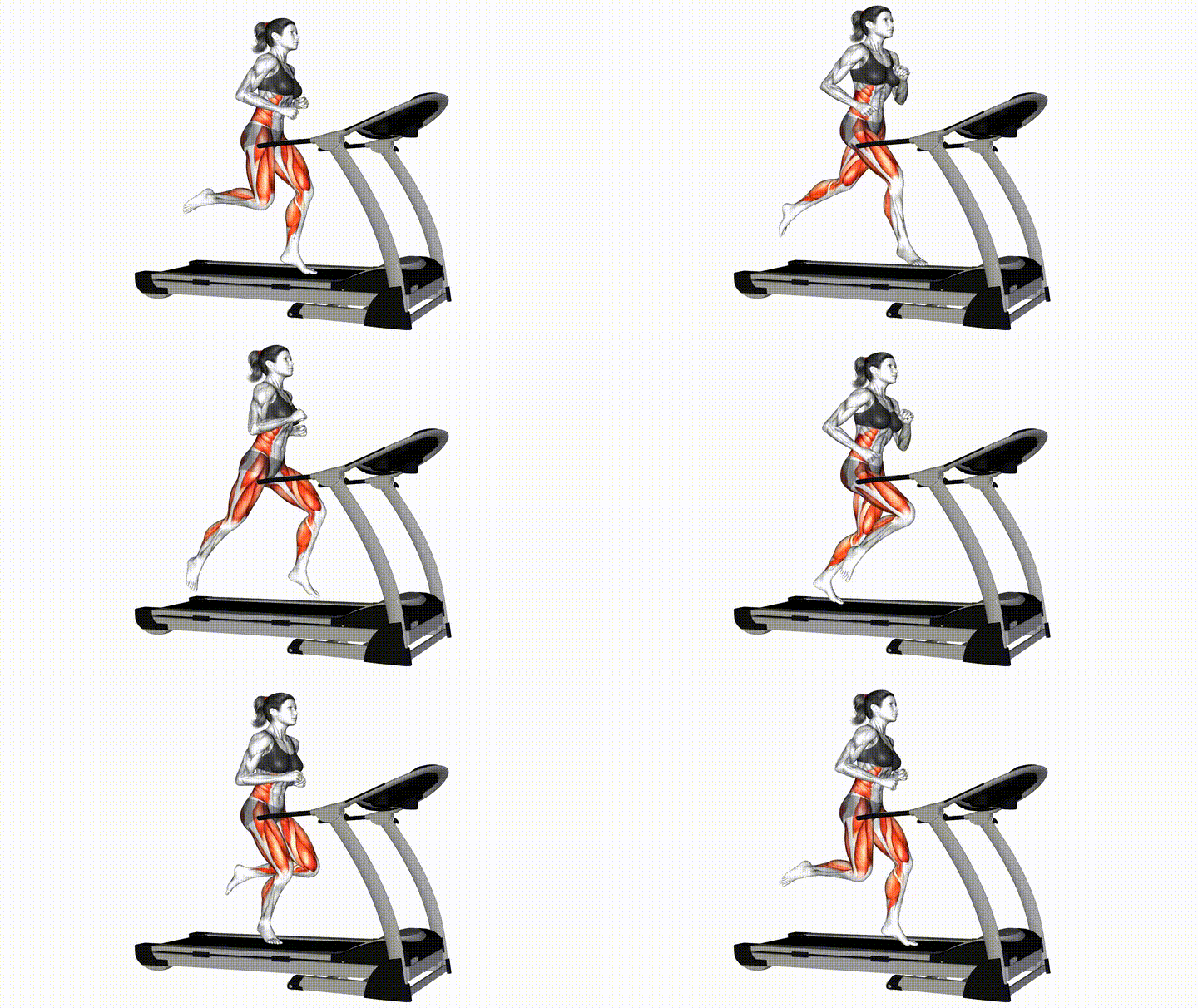
How to Do the Run on Treadmill
- Clip the safety key to your waistband, straddle the belt and start the treadmill at a walking pace.
- Step onto the belt and walk for three to five minutes while raising the speed gradually to a jog.
- Set a one percent incline to mimic outdoor running resistance and air drag.
- Run tall with a slight forward lean, eyes forward and hands off the rails.
- Land with the foot under the hips on the mid-foot and keep a quick, light cadence.
- Hold the chosen pace for the planned time or alternate hard and easy speeds for intervals.
- Reduce the speed to a walk for three to five minutes before stepping off.
Common Mistakes
- Holding the handrails: Gripping the rails unloads the legs and distorts posture. Keep the hands free and lower the speed if balance is an issue.
- Zero incline every run: A flat belt is slightly easier than the road because there is no wind resistance. Set a one percent incline for a truer effort.
- Overstriding to keep up: Reaching the foot forward to match the belt loads the shins and knees. Shorten the stride and raise cadence instead.
- Jumping off a moving belt: Stepping off at speed is the most common treadmill injury. Slow to a walk and stop the belt before leaving.
Programming Tips
For intervals program 4 to 8 sets of 60 to 120 seconds at a hard pace with an equal walking or jogging recovery, and for steady state run 20 to 40 minutes at an easy, conversational pace. Treadmill runs fit after upper-body lifting, on rest days as easy aerobic work, or as a 10 to 15 minute conditioning finisher after a leg session.
Attach the safety clip, set a one percent incline and build speed over a five-minute walk-jog warm-up. Beginners can start with 1 to 2 minutes of easy running at 7 to 9 km per hour alternated with 1 minute of walking for 20 minutes, extending the run blocks weekly until 20 to 30 minutes is continuous. The most common fault is gripping the handrails, which rounds the shoulders and shortens the stride; drop the speed until you can run hands-free.
Common Questions
What muscles does running on a treadmill work?
It works the calves, quadriceps, hamstrings and glutes, with the hip flexors and core stabilising each stride. Adding incline shifts more work onto the glutes and calves.
Is treadmill running as good as running outside?
For cardiovascular fitness it is nearly equal, especially with a one percent incline to offset the lack of wind resistance. Outdoor running still trains balance and terrain handling that a belt cannot.
What speed should I run on the treadmill?
Beginners usually jog comfortably at 7 to 9 km per hour, with easy steady runs for most people at 8 to 11 km per hour. Use a pace at which you can speak in short sentences for the bulk of your running.
How often should I run on the treadmill to lose weight?
Three to five sessions per week totalling 150 to 300 minutes of moderate running is the usual target. Diet drives most fat loss, so treat the treadmill as support and keep the sessions sustainable.
Related cardio exercises
Other ways to train the same muscle, with whatever equipment you have.
Track This Exercise in the App
Log your run on treadmill sets in 1RM.fit and watch your estimated 1RM update automatically as you get stronger.