
Pull Up
A compound upper-body pulling exercise performed on a pull-up bar or assisted machine using a supinated (underhand) close grip. The movement begins from a full hang with controlled core engagement, followed by pulling the body upward until the chin clears the bar. The elbows stay close to the torso while the lats and biceps drive the motion through a full range of motion, with a controlled lowering phase back to the start.
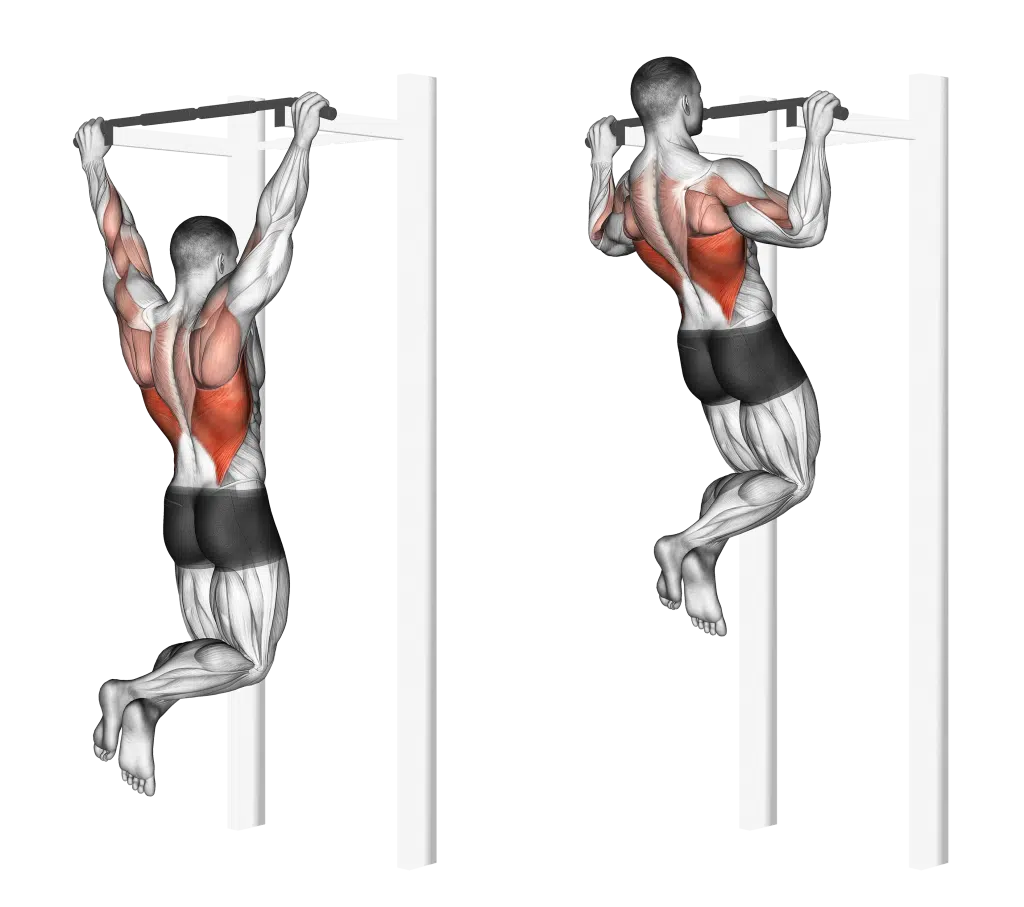
How to Do the Pull Up
- Grip a pull up bar with an overhand grip slightly wider than shoulder width.
- Hang with arms fully extended, then pull your shoulder blades down and back to take the slack out of your shoulders.
- Brace your core and keep your legs still, either straight or crossed behind you.
- Exhale and pull your elbows down toward your ribs, driving your chest up toward the bar.
- Continue until your chin passes over the bar without craning your neck.
- Lower yourself under control over two to three seconds until your arms are fully straight.
- Reset your shoulder position at the bottom before starting the next rep.
Common Mistakes
- Kipping or swinging: using momentum from the hips inflates rep counts but strips tension from the lats; keep the body quiet and pull strictly.
- Half reps at the bottom: never reaching full arm extension shortens the range where the lats stretch and weakens the movement long term.
- Chin poking over the bar: reaching with the neck instead of pulling higher creates fake full reps; the chest, not the chin, should lead upward.
- Shrugging into the ears: letting the shoulders ride up at the top hands the work to the arms; keep the shoulder blades depressed throughout.
Programming Tips
Train pull ups two to three times a week, since the lats recover quickly and frequent practice builds the skill along with the strength. If you can already do 8 or more strict reps, add weight with a dip belt and work in the 4 to 8 rep range; if you're under that, stick to bodyweight sets of max effort minus one or two reps, leaving a rep in reserve. Beginners without a full pull up should use a band or an assisted machine, reducing assistance every few weeks rather than relying only on negatives. Place pull ups early in a back or pull session while your grip and lats are fresh.
Common Questions
How many pull ups should I be able to do? Anything over 8 to 10 strict reps is a solid benchmark for most trained lifters; fewer than that is completely normal while you're building the base.
Why can I do more chin ups than pull ups? The underhand chin up grip lets the biceps assist more, which is why it's almost always the easier variation for the same person.
Are negatives enough to build up to my first rep? They help, but pairing negatives with banded assisted reps and horizontal rows tends to build the first strict pull up faster than negatives alone.
Track This Exercise in the App
Log your pull up sets in 1RM.fit and watch your estimated 1RM update automatically as you get stronger.